
MANDARIN


The Development of the Mandarin Writing System
Mandarin is written using Chinese characters, one of the world’s oldest continuously used writing systems. Unlike alphabetic scripts, Chinese writing is logographic, meaning characters primarily represent units of meaning rather than individual sounds. Over time, the script has evolved significantly in form and structure while maintaining strong visual and conceptual continuity.
Chinese writing developed not as a transcription of speech, but as a visual system capable of transcending pronunciation, allowing shared written communication across diverse spoken varieties.
Early Origins and Pictorial Forms
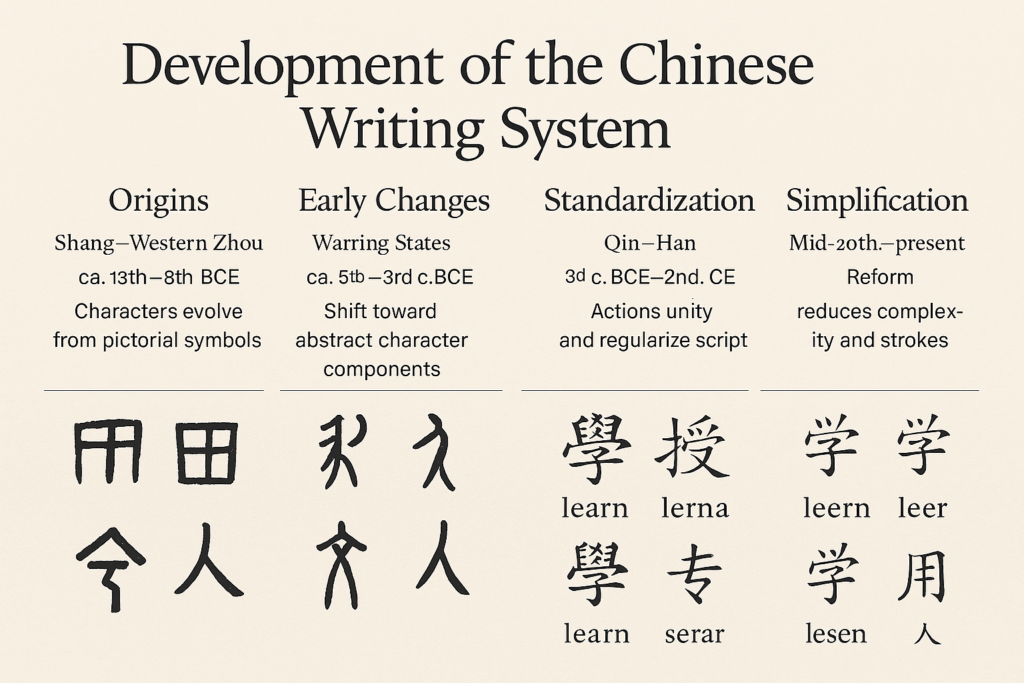
The earliest known Chinese writing dates to the late second millennium BCE, preserved on oracle bones used for divination. These early characters were often pictorial or symbolic, representing objects, actions, or abstract ideas. While initially close to images, repeated use gradually standardized these forms into recognizable signs.
As writing expanded beyond ritual use, characters became increasingly abstract and systematic, prioritizing repeatability and clarity over visual resemblance.

Structural Development and Standardization
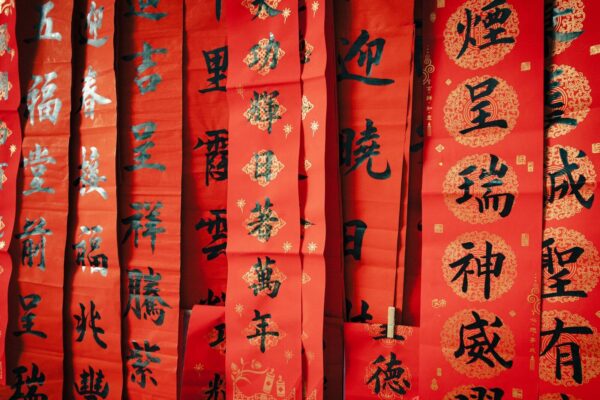
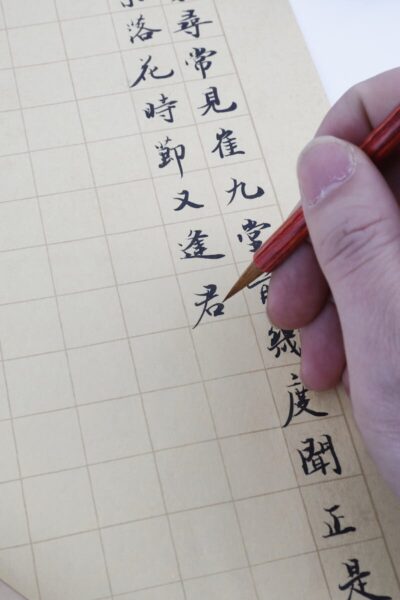
Over centuries, Chinese characters evolved into complex structures composed of reusable components, many of which provide semantic or phonetic cues. This modular system allowed the script to expand while maintaining internal coherence.
Large‑scale standardization occurred during periods of political unification, fixing:
- stroke order
- character proportions
- shared written forms across regions
This established a common visual framework, even as spoken varieties diverged.
Meaning Over Sound
A defining feature of Chinese writing is its relative independence from pronunciation. Characters encode meaning first, with pronunciation supplied by the reader’s linguistic knowledge. This allowed a single script to function across different spoken systems without modification.
As a result, the writing system preserved continuity even as speech changed, reinforcing its role as a cultural and administrative medium rather than a phonetic mirror.
Reform and Modern Use
In the modern era, reforms—including the development of simplified character forms in some regions—reduced visual complexity while preserving traditional structure. Characters were adapted for print, education, and digital environments, ensuring continued use in contemporary contexts.
Despite these changes, the fundamental principles of Chinese writing remain intact, linking modern usage to ancient foundations.

If you want to learn more about scripts and their orgins, visit our friends at