Writing systems don’t just record language—they behave.
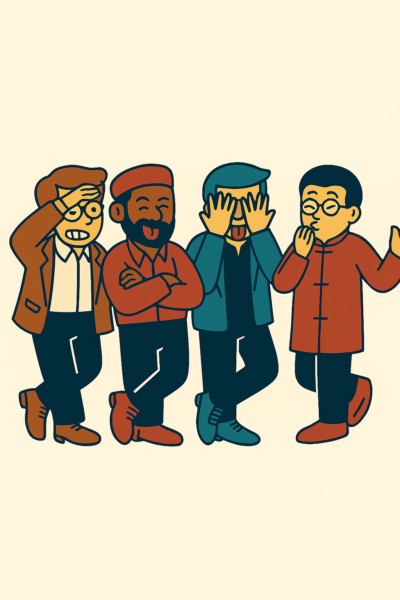
Spend enough time looking at scripts, and they start to feel less like tools and more like characters, each with their own habits, quirks, and preferences.
This isn’t a technical comparison. It’s a reminder that scripts are human creations—and they carry human traits.



Latin: The Overachiever
Latin shows up everywhere. It adapts to anything. It rarely complains.
It’s the script that says, “We’ll figure it out later,” and then never quite does. Instead of adding new letters, it stacks conventions on top of old ones and calls it tradition.
Is it efficient? Sometimes.
Is it flexible? Extremely.
Is it carrying centuries of unresolved decisions? Absolutely.
Latin isn’t neat—but it works, and it refuses to quit.
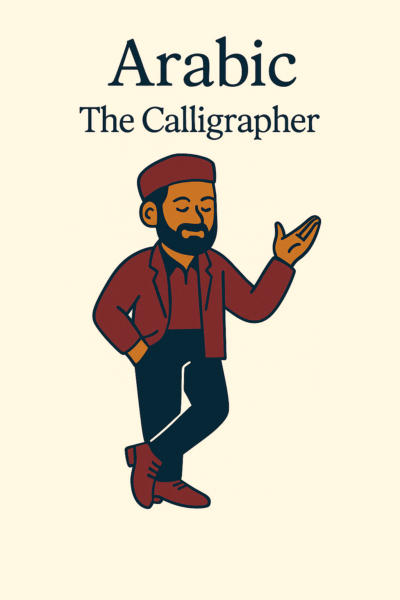
Arabic: The Calligrapher
Arabic does not believe writing should be rushed.
Its letters change shape depending on where they appear. Some marks connect, others insist on space. Reading it straight from a chart tells you almost nothing—understanding happens in context.
Arabic knows something many scripts forget: writing can be functional and beautiful at the same time. Its structure is strict, but its expression is generous.
This is a script that expects you to slow down—and rewards you when you do.

Hangul: The Engineer
Hangul is the rare script that arrives with an instruction manual—and actually follows it.
Its shapes explain themselves. Related sounds look related. Blocks stack cleanly. Once learned, it behaves exactly as promised.
It doesn’t rely on tradition to justify itself. It relies on design.
Hangul is proof that writing systems don’t always stumble into being—they can be built with intent and still feel alive.
What This Tells Us
Writing systems aren’t just methods—they’re choices.
Some prioritize speed.
Some prioritize clarity.
Some prioritize continuity.
Some prioritize beauty.
None get everything right. None need to.
Scripts survive not because they’re perfect, but because people learn to live with them.