

Latin



The Development of the Latin Writing System
The Latin script is one of the most widely used writing systems in the world today, not because it is perfectly suited to every language, but because it is highly adaptable. Originating in ancient Italy and shaped by Roman administration, the script spread widely and was reused, modified, and layered with new conventions over centuries.
Origins and Spread
The Latin script originated in ancient Italy and was shaped by Roman administration and inscriptional practices. As it spread across Europe and beyond, it was repeatedly adapted to new languages, cultures, and contexts rather than redesigned from scratch.

Visual Structure
Latin writing is built from discrete letters arranged linearly. Characters remain visually independent rather than connected or stacked, producing a steady left‑to‑right rhythm. This modular structure has made the script easy to reproduce across many materials, from stone and parchment to print and digital screens.
Adaptation Over Expansion
Rather than expanding its alphabet extensively, the Latin script typically adapts through:
- letter combinations
- spelling conventions
- diacritics and marks
New sounds are expressed by reusing existing forms, allowing the core alphabet to remain largely unchanged even as usage expands.
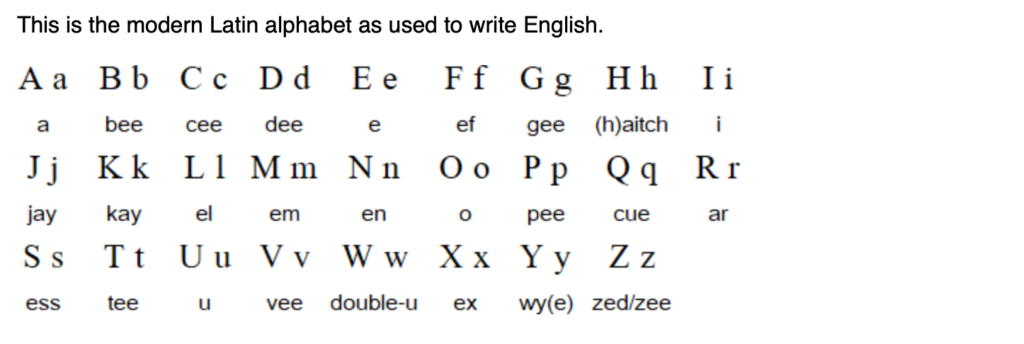
Historical Layering
One of the defining characteristics of the Latin script is its accumulated history. Many letterforms and conventions preserve traces of earlier stages long after pronunciation or usage has shifted. These layers create irregularities, but also continuity—forms persist because they are familiar.

If you want to learn more about scripts and their orgins, visit our friends at