

ENGLISH



The Development of the English Writing System
The English writing system uses the Latin alphabet, but its present form is the result of layered adoption rather than deliberate design. English writing developed through repeated cultural contact, preserving older alphabetic forms even as pronunciation and usage changed.
Rather than evolving through systematic reform, English writing accumulated conventions over time, creating a script that records its own history as much as it represents sound.
Adoption of the Latin Script
PhThe foundations of English writing were established through the adoption of the Latin script, introduced through Roman influence and later reinforced through Christian manuscript culture. This alphabet was not originally designed for English sounds, but it provided a flexible framework that could be adapted through reuse.
Early Latin writing lacked distinctions such as I/J and U/V, and relied heavily on context and reader familiarity. These limitations were carried forward into early English writing rather than being resolved through alphabetic expansion.

Old English and Script Experimentation
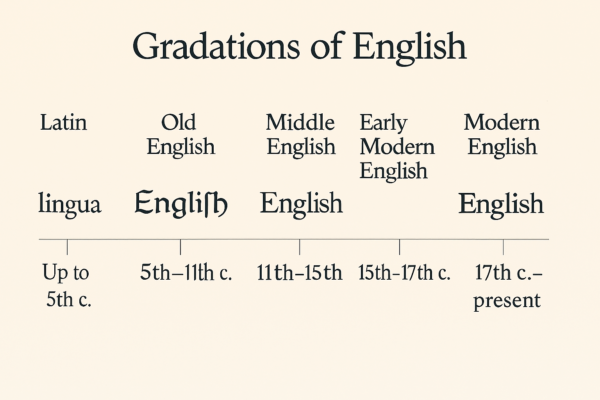
In early English manuscripts, Latin letters were combined with additional characters to represent sounds not easily captured by the existing alphabet. Spelling was largely phonetic and varied significantly by region and scribe.
During this period, the writing system was fluid:
- alphabet use was inconsistent
- letter–sound relationships were flexible
- no fixed orthographic standard existed
English writing was adaptive, but unstable.

French Influence and Orthographic Layering
Following the Norman Conquest, French scribal practices reshaped English writing. New letter combinations and spelling conventions were introduced, often reflecting French usage rather than English pronunciation.
This period layered the writing system with:
- silent letters
- multiple spellings for similar sounds
- visually conservative forms
Rather than replacing older practices, new ones were added on top of them, increasing complexity without redesign.

Printing and Alphabet Stabilization
The introduction of printing in the 15th century marked a crucial turning point. Printers standardized spelling, fixed letterforms, and separated previously shared letters such as I/J and U/V, resulting in the modern 26‑letter alphabet.
Once stabilized in print, English writing became resistant to further reform, even as spoken English continued to change.e for preservation rather than innovation.
Modern English Writing
Today, the English writing system remains highly historical. Its alphabet is stable, but spelling reflects centuries of accumulated decisions rather than a transparent representation of sound.
English writing functions as:
- a record of cultural contact
- a repository of inherited conventions
- a globally adaptable script with internal inconsistency
Its resilience lies not in efficiency, but in continuity.

If you want to learn more about scripts and their orgins, visit our friends at