Comparing a Few Writing Systems
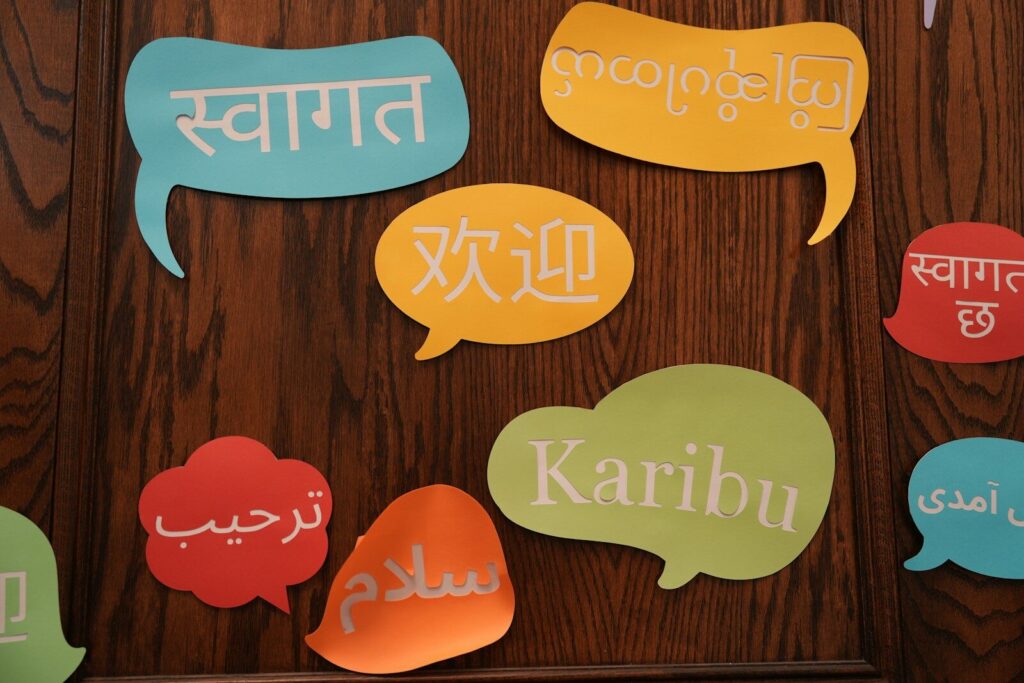
Writing systems are often discussed as if they are answers to the same question—how do we write language?
In practice, they are answers to different problems, shaped by materials, priorities, and cultural values.
Looking at a few scripts side by side reveals not a single path forward, but a range of strategies for making language visible.
Latin: Adaptability Through Reuse
The Latin script is defined less by design than by resilience. Its core alphabet stabilized early, but it has been reused, repurposed, and layered with conventions across centuries.
- Letters represent individual sounds.
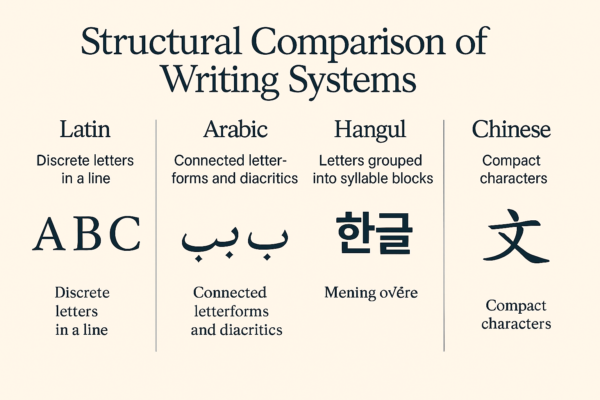
- The script works linearly, with discrete characters.
- New sounds are handled through digraphs and spelling rules rather than new symbols.
Latin’s strength is not precision, but adaptability. It carries history forward rather than rewriting itself, which is why the same alphabet can serve English, French, Swahili, and hundreds of other writing systems—with uneven results.
Latin shows how a script can survive by being good enough, not perfect.



Arabic: Structure with Visual Flexibility
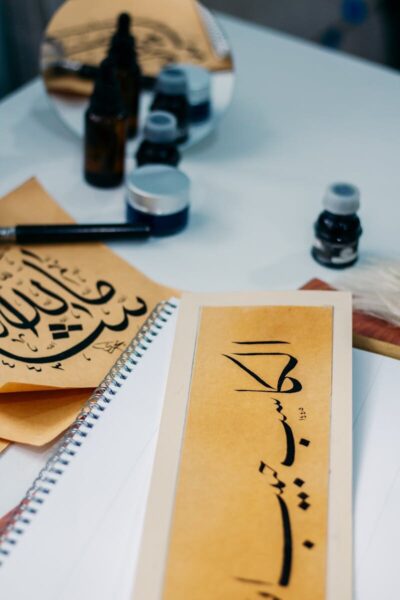
The Arabic script takes a different approach. As an abjad, it records primarily consonants, relying on reader knowledge to supply vowels. Its structure stabilized relatively early, but its visual expression expanded.
- Letters change shape based on position.
- Writing is cursive and continuous.
- Optional marks add pronunciation detail when needed.
Rather than increasing the alphabet, Arabic developed through annotation and style. Calligraphy is not an extra layer—it is part of how the script lives. Arabic demonstrates how a writing system can be both highly structured and visually expressive without altering its foundation.
Hangul: Intentional Design
Hangul stands apart as a script created deliberately rather than inherited gradually. Where Latin and Arabic accumulate change, Hangul begins with a plan.
- Letters represent sounds.
- Shapes reflect how sounds are physically produced.
- Characters are grouped into syllable blocks.
Hangul’s clarity comes from systematic internal logic. Its consistency makes it highly learnable, and its design has required little revision since its creation. It shows what happens when a writing system is engineered with accessibility in mind from the start.

Chinese Characters: Meaning Over Sound
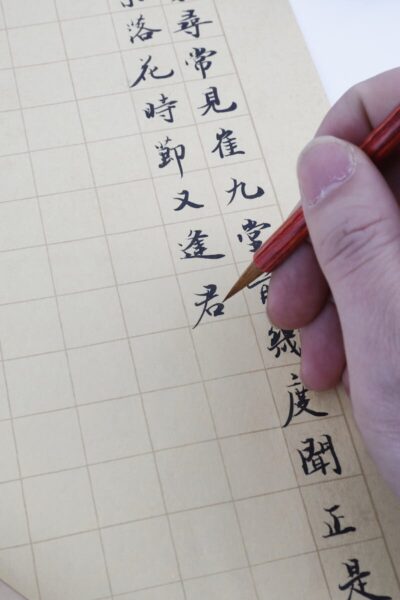
Chinese writing takes a fundamentally different route. Characters primarily encode meaning, not pronunciation. This allows the script to operate independently of speech patterns.
- Characters are visually complex and modular.
- Pronunciation is supplied by the reader.
- The same writing system can function across diverse spoken varieties.
Where alphabetic systems track sound change, Chinese writing preserves continuity. It demonstrates that writing does not need to mirror speech closely in order to remain functional—or even dominant. The result is a script that acts as a cultural anchor rather than a phonetic guide.
What These Scripts Reveal
Placed side by side, these systems highlight several contrasts:
-
Sound vs. Meaning
Latin and Hangul prioritize sound; Chinese prioritizes meaning; Arabic balances sound with structural economy. -
Change vs. Preservation
Latin and English show layers of historical accumulation; Hangul shows minimal drift; Chinese preserves visual continuity; Arabic refines without restructuring. -
Tool and Material Influence
Arabic’s flow reflects pen and ink. Latin’s letterforms reflect carving, print, and type. Chinese stroke order reflects brush writing. Hangul reflects hand-drawn geometry.
None of these approaches is more “advanced.” Each reflects decisions about what matters most: efficiency, continuity, clarity, or beauty.

One response to “Different Threads, Different Solutions”
Hi, this is a comment.
To get started with moderating, editing, and deleting comments, please visit the Comments screen in the dashboard.
Commenter avatars come from Gravatar.